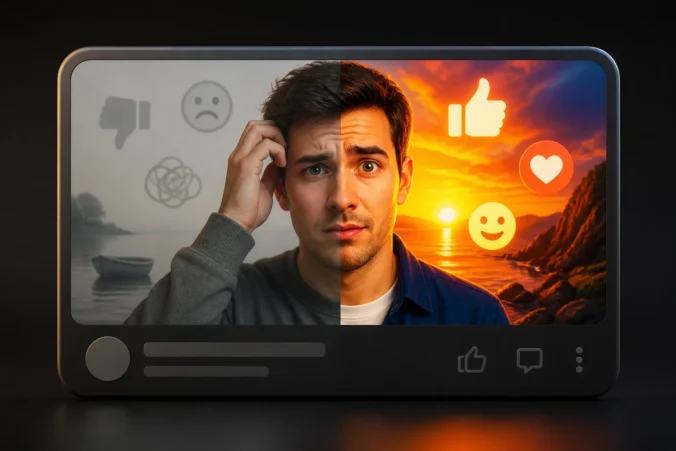
YouTube CTR depends on both thumbnail-and-title packaging and the traffic source: half of YouTube channels and videos have impressions CTR between 2% and 10%, but no universal benchmark applies to every video. Thumbnail and Title Mistakes That Hurt Click-Through Rate include unclear promises, unreadable text, mismatched titles, and misleading clickbait that can weaken retention after the click.
- 90% of YouTube’s top-performing videos in one cited finding use custom thumbnails.
- YouTube calculates CTR by dividing views from registered impressions by registered impressions and multiplying by 100.
- Half of YouTube channels and videos have an impressions CTR between 2% and 10%.
- The recommended video-thumbnail aspect ratio is 16:9.
- YouTube Studio's native thumbnail test is scored on watch time, not CTR alone.
How is YouTube click-through rate calculated, and which impressions count toward it?
YouTube impressions click-through rate measures how often viewers watch after seeing a registered YouTube impression. Thumbnail and Title Mistakes That Hurt Click-Through Rate can only be evaluated correctly when you understand that denominator. Thumbnail and Title Mistakes That Hurt Click-Through Rate should be assessed alongside watch time and audience retention, not CTR alone.
YouTube calculates CTR by dividing views from registered impressions by registered impressions, then multiplying by 100. Counted impression sources include the home feed, suggested videos, search results, and notifications; the cited definition says a thumbnail is counted when visible on screen for at least one second.
External websites and end screens aren't included in impressions CTR, so the metric represents only some channel views. High CTR, watch time, and audience retention signal that viewers are interested in the content. Thumbnail and Title Mistakes That Hurt Click-Through Rate can therefore produce a misleadingly attractive click result if the viewing experience doesn't hold attention.


Thumbnail and Title Mistakes That Hurt Click-Through Rate: Which mistakes most commonly lower CTR?
Thumbnail and title packaging can lose clicks when the promise is unclear, the text is unreadable, or the title doesn't match the thumbnail. Thumbnail and Title Mistakes That Hurt Click-Through Rate often begin with too much text, boring visuals, no curiosity, weak emotions, or a confusing message. Thumbnail and Title Mistakes That Hurt Click-Through Rate also include titles and thumbnails that repeat instead of complementing each other.
Custom thumbnails deserve attention: one cited finding says 90% of YouTube’s top-performing videos use them. Recommended design fundamentals include strong contrast, a clear subject, readable typography, and focused composition. Too many points of interest can cancel each other out and make a thumbnail easy to skip.
Keep important content away from the lower-right corner because YouTube’s video-duration indicator can cover it. Packaging problems also include an unclear promise and a title-thumbnail mismatch.

What thumbnail dimensions and aspect ratio should YouTube creators use?
Thumbnail and Title Mistakes That Hurt Click-Through Rate aren't limited to wording; unsuitable dimensions can also affect how a design appears. Thumbnail and Title Mistakes That Hurt Click-Through Rate are easier to prevent when you select a documented size and ratio before designing. Thumbnail and Title Mistakes That Hurt Click-Through Rate should be checked against the destination feed as well as the original image.
The cited recommendations differ on resolution: one specifies × pixels with a minimum width of pixels, while another recommends × pixels. Canva also recommends × pixels, a minimum width of pixels, a 16:9 aspect ratio, and a file size up to MB.
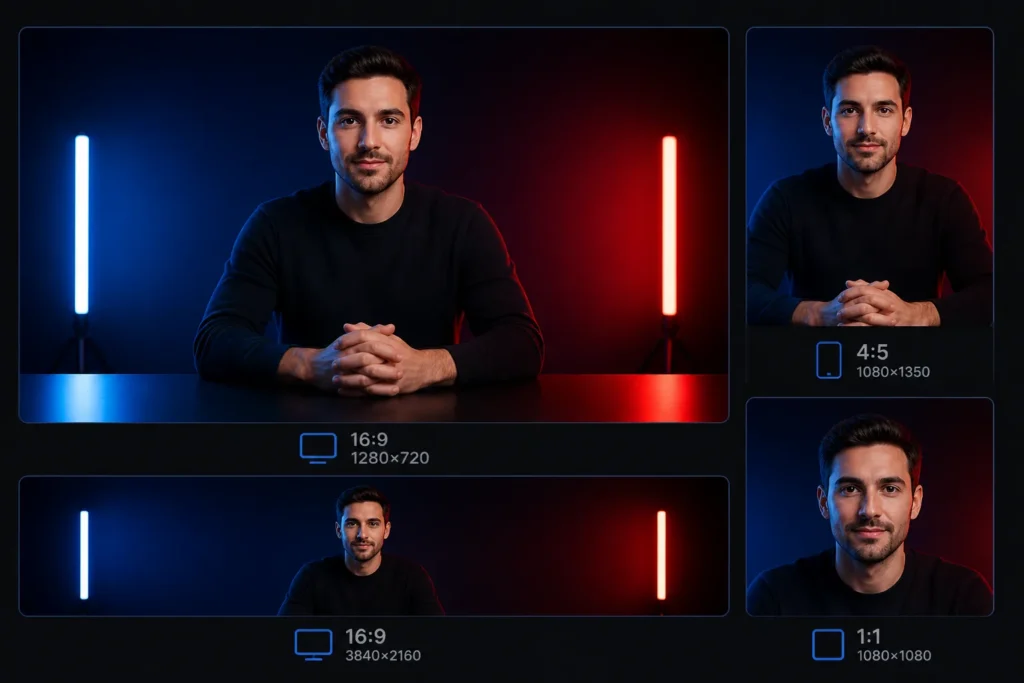
The recommended video-thumbnail aspect ratio is 16:9. YouTube recommends a 1:1 square ratio for podcast playlists. Vertical-video thumbnails in 16:9 are automatically cropped to 4:5 on the home page, explore page, and subscription feed.

How can creators diagnose whether a low click-through rate comes from the thumbnail and title or from the video topic?
YouTube Studio separates channel-level and individual-video CTR data: channel impressions and CTR appear under Analytics and then Content, while an individual video's CTR appears on its Reach tab. Thumbnail and Title Mistakes That Hurt Click-Through Rate should be diagnosed from that evidence rather than from one early result. Thumbnail and Title Mistakes That Hurt Click-Through Rate are more likely when CTR is low but retention is strong.
Compare videos over the long term while accounting for traffic sources, and review CTR after a substantial number of impressions rather than immediately after upload. Filter before redesigning: a 3% overall CTR could comprise 7% search CTR and 2% browse CTR.
Low CTR with strong retention points toward testing the thumbnail or title; low CTR with weak retention points toward revisiting the topic or audience fit. For a stalled video, test a new thumbnail before assuming the topic is the problem.

How can creators revise and A/B test a thumbnail and title without making them misleading?
Thumbnail and Title Mistakes That Hurt Click-Through Rate are best revised without shock-value or exaggerated clickbait. Thumbnail and Title Mistakes That Hurt Click-Through Rate can raise clicks briefly while damaging the experience if the promise isn't delivered. Thumbnail and Title Mistakes That Hurt Click-Through Rate should therefore be judged by viewing quality, not CTR alone.
Avoid clickbait that uses shock value or exaggeration, and make the thumbnail, title, and metadata deliver what they promise. YouTube warns that clickbait can produce low average view duration and make a video less likely to be recommended. Testing several versions on one video can also be confounded by different audiences and traffic sources.
YouTube Studio's native thumbnail test is scored on watch time, not CTR alone. The cited Test & Compare capability lets eligible creators test up to three thumbnails, three titles, or combinations on long-form videos. One recommendation is to test new videos before 1,000 lifetime impressions and leave videos that already perform well unchanged.

How many words should a thumbnail contain, and how can you check that its text is readable on mobile?
Thumbnail and Title Mistakes That Hurt Click-Through Rate often include text that is too long to process quickly. Thumbnail and Title Mistakes That Hurt Click-Through Rate can be reduced by using only a few keywords. Thumbnail and Title Mistakes That Hurt Click-Through Rate should also be checked at the size viewers will actually see on phones.
Recommendations range from using only a few keywords to a maximum of 3–5 words. Another cited recommendation is five words or fewer, with large, readable text that adds information rather than repeats the title. Snappa advises using only enough concise text to describe the video and build interest.
Apply the one-quick-glance test: text that users can't read in one quick glance is too much text. Scale the finished thumbnail down to check legibility, because text readable on a desktop may be unreadable on phones or elsewhere.
What is a good YouTube click-through rate, and how does it vary by traffic source and audience?
Thumbnail and Title Mistakes That Hurt Click-Through Rate can't be judged against one universal number. Thumbnail and Title Mistakes That Hurt Click-Through Rate should be interpreted by traffic source, audience, and impression volume. Thumbnail and Title Mistakes That Hurt Click-Through Rate may look different on Home, search, suggested videos, or a channel page.
Half of YouTube channels and videos have an impressions CTR between 2% and 10%. YouTube says CTR varies with content type, audience, and where the impression appeared. A video receiving many Home Page impressions may naturally have a lower CTR, while videos whose impressions mainly come from a channel page may have a higher CTR.
There is no universal good CTR for every video, niche, or recommendation shelf. Compare each traffic source with the video's own historical baseline. Smaller channels may have higher CTR because their videos are shown mainly to known subscribers.

| Source | Recommended resolution | Aspect ratio | Minimum width | Maximum file size |
|---|---|---|---|---|
| blog.kdcc.social | 3840 x pixels | 16:9 | 640 pixels | — |
| snappa.com | 1280 by pixels | 16:9 ratio | — | — |
| canva.com | 1280 by pixels | 16:9 aspect ratio | 640 pixels | up to MB |
Key Takeaways
- Compare CTR by traffic source and against the video's own historical baseline.
- Check thumbnail text at a reduced mobile size because desktop-readable text may be unreadable on phones.
- Use a clear promise and make the thumbnail, title, and metadata deliver what they promise.
- Treat watch time and audience retention as important context alongside CTR.
- Use YouTube Studio's Test & Compare capability where eligible, and judge tests by watch time rather than CTR alone.
Frequently Asked Questions
How to make a good thumbnail and title?
A good thumbnail and title make a clear promise, use readable thumbnail text, and complement rather than repeat each other. YouTube advises delivering what the thumbnail, title, and metadata promise.
Is a YouTube thumbnail 1920×1080?
YouTube thumbnail recommendations include × pixels and a 16:9 aspect ratio. Another cited recommendation is × pixels, with a minimum width of pixels.
How important are thumbnails on YouTube?
Thumbnails matter because 90% of YouTube’s top-performing videos in one cited finding use custom thumbnails. Strong contrast, a clear subject, readable typography, and focused composition are recommended.
What is a good thumbnail click-through rate on YouTube?
There is no universal good YouTube CTR for every video, niche, or recommendation shelf. Half of YouTube channels and videos have an impressions CTR between 2% and 10%, but traffic source and audience affect the result.